
Chaonei No. 81
The House That Never Dies
Country: China
It’s not the tallest, not the most ornate, but there’s something about it that stops people in their tracks. Constructed in the early 20th century in an unusual French Baroque style, this weathered mansion with its cracked windows and choking ivy looks less like a home and more like a ghost trapped in brick and mortar.
 |
| Chaonei No. 81 - Front Backyard |
This house started its life in 1922, carved out for a man named Georges Bouillard, a French engineer working on the railways that stitched China together in the chaotic dawn of the 20th century. Bouillard was no stranger to old Beijing’s streets; he’d come for the Qing dynasty and stayed on through the Republic, cataloging everything from railway lines to local customs. His camera caught faces and streets that history nearly forgot.
But life is short for the ones who build legacies in stone. Bouillard’s days were numbered, and by 1930, he was gone, buried in the Zhanlan’er cemetery beneath a cold sky. His widow, Zhu Derong, inherited the house and his sprawling library: thick, dusty tomes filled with notes on wine, language, folk tales, a window into a world slipping away. She gifted those treasures to the National Library, but the house itself… that was something else entirely.
When the Japanese marched through Beijing, the house was spared. They knew it belonged to a Frenchman, a symbol tangled up in alliances and wartime politics. But after the war, things shifted. Zhu Derong was pushed to rent the ground floor to an Augustinian convent. The upper floors became a church, an infirmary, a dormitory. The once-quiet house hummed with prayers, whispers, and footsteps of those who came seeking shelter from a world unraveling.
In 1948, Zhu Derong sold the house to a Lazarist priest but stayed on, clinging to her memories in the shadows of the ground floor. Then the new regime came, sweeping away the old world like a relentless tide. Foreign missionaries were evicted in 1951. Priests vanished into re-education camps, churches were nationalized, and the house’s walls grew heavier with silence and fear.
Zhu Derong remained, stubborn against the currents of change, too old and frail to leave. But then, one day, she simply disappeared. No farewell, no gravestone, no final rest. Just a mystery wrapped in whispers. No trace of her name in any graveyard.

During the Cultural Revolution, the Red Guards briefly occupied the building but fled after only a few days, claiming the house “felt alive” with a presence that unnerved even the most fearless. Construction workers and explorers who have dared to enter the basement tunnels beneath the house tell of strange noises, sudden cold spots, and shadows that move just beyond their vision. Some have even vanished for hours, only to emerge dazed and speechless, refusing to return. |
These feelings aren’t isolated. Local residents often report eerie footsteps echoing from within the crumbling walls late at night. An old security guard stationed near the property for several months told a chilling story:
“Three nights in a row, I saw her, a woman in white, drifting by the second-floor windows at exactly 2:17 a.m. She never spoke or looked at me, just passed through like mist. On the third night, I went to check inside after she disappeared. I never came back to the post. They found my badge on the ground, covered in frost.
Renovation efforts in recent years have tried to preserve the mansion as a historic site, but workers report unexplained malfunctions and a persistent feeling of being watched. Floorboards creak under invisible footsteps; walls seem to whisper names and warnings.
Zhang Wei, a construction worker assigned to the renovation project in 2016, recalls his time inside vividly:
“On my first day, the air was thick, heavy. It smelled like damp earth and something… rotten, but not quite. As I climbed the stairs, I heard whispers. Not voices, but whispers, like the house itself was speaking in a language I couldn’t understand. I stopped and looked around. There was no one. But the sound followed me, growing louder, until I left the room shaking.”
Another crew member, Liu Mei, refused to enter the attic after her first visit:
“I was carrying supplies when I felt it, a pressure in the air, like the weight of a thousand eyes. I looked up, and saw a shadow move past the broken window, a pale figure in white. My heart pounded. I ran out and didn’t go back. Even now, I wake up sometimes, feeling someone’s breath on my neck.”
Beneath the house lies a network of tunnels, supposedly connecting Chaonei No. 81 to distant parts of Beijing. Amateur explorers who’ve dared to venture into the basement speak of furniture arranged as if waiting for company, cold drafts that can’t be explained, and walls that seem to pulse with a life of their own.
One explorer, Li Jie, described his experience:
“The deeper I went, the darker it became. I found a room with old wooden chairs and a table covered in dust, like someone had just left. Then I felt it, a presence. It was watching me. I heard breathing, slow and heavy, behind the walls. I ran and didn’t stop until I was outside.”
Deep in the stairwell, a name is carved into the wood, “Zhu Derong” scratched not with a tool but with fingernails, as if the house itself tries to remember what others want to forget.
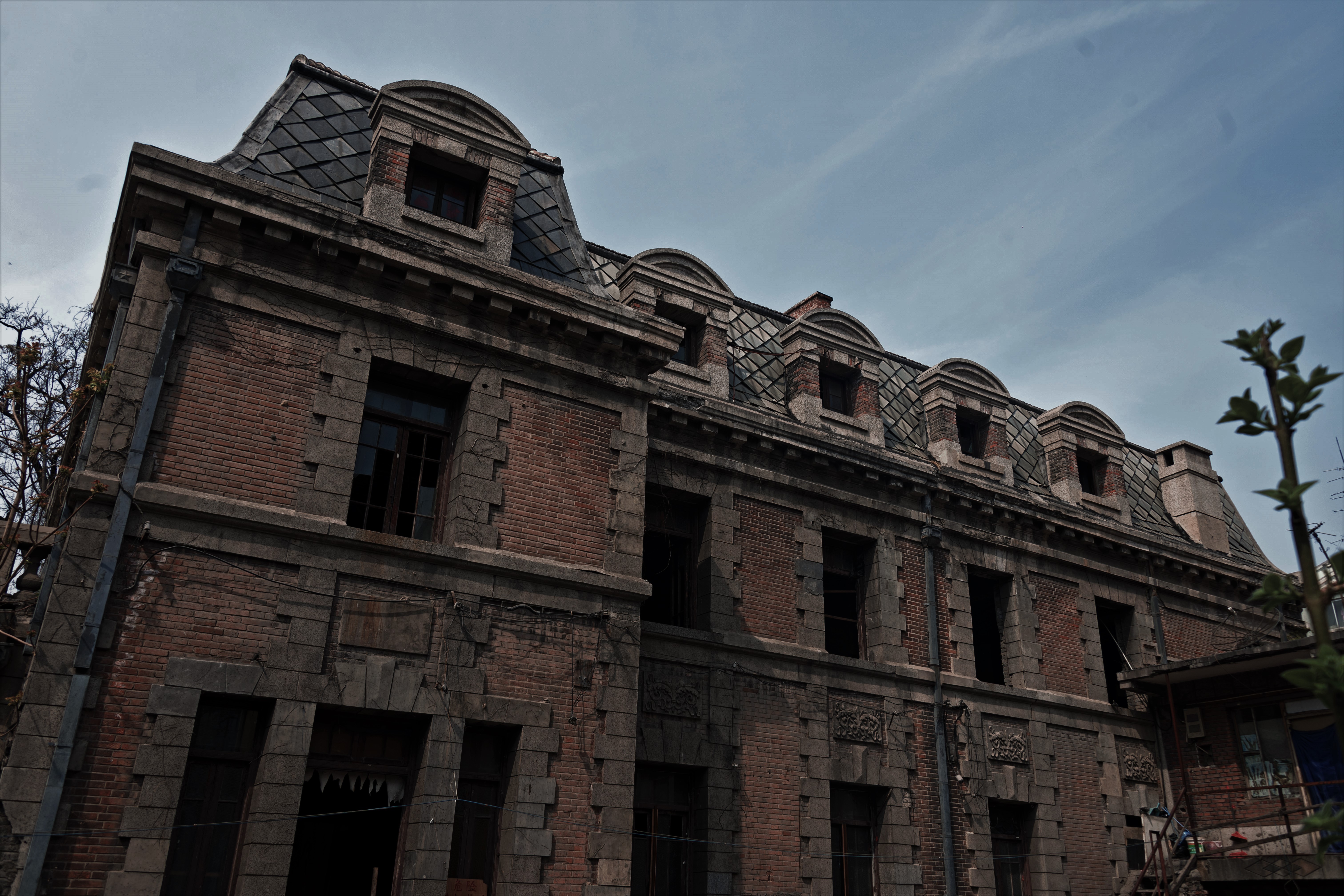 |
| Chaonei No.81 |
Nuns who once lived in the building’s upper floors during the 1930s reportedly refused to enter the east wing, citing “voices speaking Latin,” and left hastily after only a few months. One left a note behind:
“This place is not forsaken. It is occupied.”
The house’s atmosphere is thick with grief, regret, and memories that refuse to fade. The cold spots, whispers, flickering lights, and ghostly apparitions aren’t just phenomena, they’re the manifestation of a deep and persistent unrest.
The building’s eerie reputation grew further in 2014 with the release of The House That Never Dies, a horror film loosely based on its history. The movie turned Chaonei No. 81 into a media sensation, drawing crowds of tourists and paranormal enthusiasts. Despite official warnings about the crumbling structure and risks of trespassing, the house remains a magnet for those drawn to its mystery.
Chaonei No. 81 is more than just a building. It’s a vessel for memory, pain, and silence. It doesn’t scream or rattle chains; it waits quietly, a slow accumulation of stories and secrets, refusing to let go. To many, it is Beijing’s most haunted house, not because of flashy apparitions or sudden scares, but because of the heavy, unshakable presence it carries. Some say the house isn’t haunted by ghosts, but by history itself, holding onto the echoes of lives long lost and refusing to forget.
 |
| Attic Chaonei No. 81 |
 |
| Chaonei No. 8, Spring 2009 |
Eyewitness Accounts & Quotes
Li Yongjia, Local Resident:
“As kids, we played near the house but never dared to go inside alone. Even the Red Guards fled after a few days, frightened by the noises. It felt like something alive was watching us.”Construction Worker (anonymous, 2001):
“I went down into the basement tunnels with my team. I was the only one who came back. I heard voices and saw flickering lights deep underground, things no one should see.”Former Nun (name withheld):
“The east wing was forbidden. I heard voices chanting in Latin when no one was around. This place is not abandoned, it’s occupied.”Visitor, 2014 (quoted in a local blog):
“I stood still for minutes and heard footsteps above me. The floorboards are too rotten to walk on, but someone was definitely there.”Renovation Crew Member, 2016:
“Tools disappeared, floorboards cracked underfoot, and the air felt thick, like the house was breathing down my neck. We didn’t last long.”Graffiti in the Basement:
“LET IT BURN.”References & Further Reading
- The New York Times: A Ghost Story’s Uncertain Past
- China Rhyming: More on Chaonei No. 81
- “China’s Forgotten Places” Blog: Original Field Report
- China's forgotten places and urban dystopias: http://chinaruins.eg2.fr/2017/10/11/beijing-haunted-house/


Comments
Post a Comment